What May Cause Football Odds to Move Before Kickoff on okfunn.io
Refresh a football match page on okfunn.io an hour before kickoff, and the odds you see will often look different from the opening line posted two days earlier. That is not a glitch. Football odds move before kickoff because the market is re-pricing the match based on new information, betting flow, and bookmaker exposure. In short, odds changes are not random; they are the market adjusting its view of how likely each outcome really is.
For a beginner, the most useful way to read pre-kickoff movement is to separate information-driven moves from money-driven moves. A confirmed injury is information. A wave of bets on a popular team is money flow. Both can alter the price, but they mean completely different things for your own wager. The more precisely you can name the cause, the better your decision will be.
The Five Forces That Move a Football Line
Every odds movement on a football fixture traces back to one of five forces. They rarely operate alone, but naming them makes the market easier to decode.
- Information — injury updates, lineup leaks, weather forecasts, travel fatigue, fixture congestion.
- Sharp money — professional bettors who usually move first and move large.
- Public money — the heavy flow of casual bets on famous clubs and popular selections.
- Bookmaker exposure — the operator’s need to manage liability so one result does not create a huge payout.
- Cross-market pressure — odds moving on one sportsbook that other books then follow.
These forces work together. A bookmaker might receive sharp money on the away team and shorten its odds before any official lineup is announced. Then casual bettors see a value price on the home favorite and push that side down again. Each adjustment reflects a different kind of knowledge, and the final price at kickoff represents the messy compromise between them.
When you open a match on okfun, the numbers on your screen are a snapshot of that exact moment. If you return a few hours later, the bookmaker has likely revised its probabilities in response to one or more of those five forces.
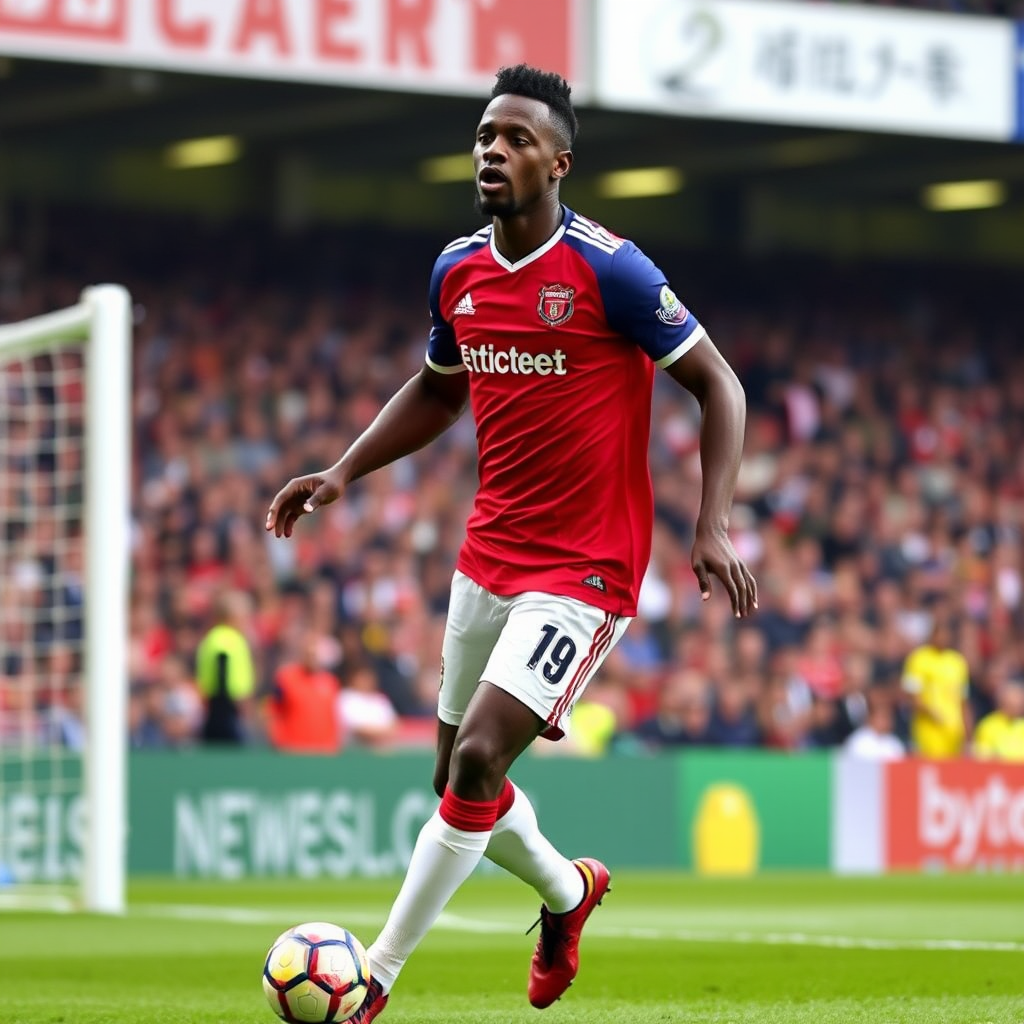
 Hình minh hoạ: okfun
Walking Through One Match, from Opening Line to Kickoff
Let’s track a single top-league fixture from its opening line to the starting whistle. This is how a normal two-day window behaves.
Two days before kickoff, the bookmaker posts an opening line generated from statistical models. Expected goals, home advantage, rest days, squad depth, and recent form are all priced in. At this stage, the company adds its own margin to guarantee a profit over the long run. The opening line is a guess, not a verdict.
48 to 24 hours before kickoff is usually a calm stretch. The movement comes mainly from sharp bettors who compare the opening line against their own models. If a team’s defense is missing two key players, they might wager early, before the lineup leak confirms it to the public. A sharp move in this window is often the earliest reliable signal that the market’s original price was wrong.
24 to 12 hours before kickoff, team news starts leaking. A manager’s press conference, a training-ground report, or a photograph of a player boarding the team bus can each shift the line. During this window, public money also starts flowing toward big clubs. A popular favorite may see its price shorten even if no meaningful information has changed. That is the public force at work, not intelligence.
Around six hours before kickoff, weather becomes a factor. Heavy rain slows passing teams and often reduces clear scoring chances. Strong wind complicates crosses and set pieces. Professional bettors do not simply read weather as a sign of over or under — they ask what rain or wind does to the specific style of each team. A possession-heavy side may suffer more than a direct, physical side.
60 to 90 minutes before kickoff is the most volatile window. Official lineups appear, and the market reacts to every surprise. A star player on the bench can move the match odds by ten percent or more. Over/under lines react to confirmed attackers, while the Asian handicap often absorbs the shock through a simple half-goal or quarter-goal adjustment.
The final minutes before kickoff are more about liquidity than information. Bookmakers tighten their margins, bettors close out exposure, and anyone waiting for a slightly better number takes what the market gives. The closing line is usually the most accurate price of the entire match because it contains all of the information and all of the money flow that arrived before the first whistle.

How Odds Movement Plays Out in Each Betting Option
Not every market responds to the same news in the same way. If you want to interpret movement correctly, you need to understand the personality of each bet type.
Match Result (1X2)
The 1X2 market is the most visible and the most vulnerable to public sentiment. Casual bettors love picking winners, so famous clubs almost always attract heavy money and their prices shorten accordingly. This is why a top team’s odds often drop before team news that is actually neutral. When you see 1X2 movement, ask whether it is public-driven or news-driven. If the move is simply a wave of home fans backing their side, the other side may now hold genuine value.
Over/Under Goals
Total-goals markets respond more slowly to public money because they require a little more thought from the casual bettor. The price usually reacts to confirmed attacking and defensive personnel. A missing main striker improves the under price; a weak goalkeeper in the confirmed lineup improves the over price. Because defensive details are harder to spot than star names, the over/under line can stay inefficient longer than the 1X2 market.
Asian Handicap
Asian handicap is the truest gauge of professional movement. These lines are priced in decimals and half-goal or quarter-goal increments, which discourages casual participation. When the Asian line shifts, it is usually a response to sharp money or bookmaker exposure rather than social media hype. A move in this market deserves more respect than a move in a plain match-result market.
Both Teams to Score and Correct Score
Both Teams to Score moves with realistic scoring probability, not just match strength. A strong underdog with a reliable striker keeps BTTS interesting even when the match odds are lopsided. Correct score is the most volatile of all: a single lineup change can produce dozens of repriced combinations. It is a low-probability, high-risk game that should never carry a large part of your bankroll.
If you prefer monitoring several matches at once, the Thể thao page gives you a single starting point to compare how different leagues react to news. You will notice quickly that smaller leagues move with more noise and less precision than major competitions.
| Market | Main Driver of Movement | Relative Volatility |
|---|---|---|
| Match Result (1X2) | Public money and lineup surprises | Medium to high |
| Over/Under Goals | Confirmed attackers and defensive personnel | Medium |
| Asian Handicap | Sharp money and bookmaker exposure | Medium |
| Correct Score | Information shocks and low liquidity | Very high |

Where the Real Risk Lives
The most dangerous assumption is that every odds movement contains hidden information. In reality, many movements are simply bookmakers avoiding risk. An operator does not need to predict football correctly; it only needs to keep its liabilities balanced. A book that takes too much money on one side will move the price to attract the opposite side. That is a risk-management action, not a statement about the match.
Chasing steam is another silent cost. When a line begins to move quickly, you feel pressure to act before the number disappears. Yet by the time you see the movement on a retail sportsbook, the value has often been captured by faster participants. Late chasing turns a sharp market into a losing pattern for the average bettor. If your reason to bet is simply « the line is moving, » you are not betting on football; you are betting on momentum you cannot lead.
Lineup news is also easy to misread. A star striker starting does not automatically justify a larger over bet. You still need to assess the opponent’s defensive shape, the midfield battle, tactical matchups, and whether the odds have already adjusted to the news. Bookmakers and fast-moving bettors price confirmed lineups in minutes. Your edge, if any, comes from deeper interpretation, not from faster reaction.
Information quality is a risk of its own. Social media is full of fake lineups, dramatized injuries, and rumors that sound credible. A verified club account or a respected journalist carries real weight; an anonymous post carrying a screenshot does not. If the market has not reacted to a rumor, ask yourself why. Usually, the answer is that the rumor has no confirmed source.
There is also structural risk. Sportsbooks apply margins that make the odds slightly worse than the true probability in every market. If you bet often and react quickly, that margin compounds against you. Add the possibility of account restrictions for frequent winners, and you begin to see why odds movement alone is not a business model.
Responsible limits matter at every stage. Odds analysis is a skill, not a guarantee of profit. You are pricing probability and uncertainty against an operator whose entire system is engineered to withstand exactly the behaviors described here. Never wager money you cannot afford to lose, and treat each match as a single, high-variance event.

A Disciplined Way to React to Odds Movement
You do not have to ignore odds movement entirely. You simply need a filter before acting on it.
- Decide before the news arrives. Build your own read on the match, define the price at which you are comfortable betting, and wait for the market to come to you. If it never arrives, you skip the match without regret.
- Ask why the line moved. A move caused by a confirmed lineup is new information. A move caused by public affection for a famous club is psychology. The first changes the probability estimate; the second changes nothing.
- Compare the movement across multiple bookmakers. If one operator moves while others hold steady, that is likely a book-specific exposure decision. If the entire market moves together, the signal is stronger and more credible.
- Cap your stake on high-volatility markets. Correct score, long-range totals, and exotic combinations are not suitable for heavy exposure. Set a smaller limit before you enter, not after the bet is already placed.
- Use the closing line as your benchmark. After the match finishes, compare the price you took to the closing price. When you consistently beat the close, your process has edge. When you do not, you are paying a repeated cost for indecision or haste.
Bankroll management belongs inside the same system. Define the maximum percentage of your bankroll you will expose on a single day. Do not raise your stake simply because a line is moving in your favor. Movement creates the illusion of certainty; it does not remove variance from a single fixture.
Frequently Asked Questions About Pre-Kickoff Odds Movement
Do football odds always move before kickoff?
No. When the opening line is well balanced and no significant information arrives, odds can remain stable until the whistle. The absence of movement is also a signal — it suggests that the original price was unusually efficient and that sharp bettors found little to exploit.
Is it better to bet early or late before kickoff?
Early betting gives you better prices before the market reacts to news. Late betting gives you more certainty about lineups and tactics. The correct choice depends on what you value more: price or information. If you have already built a strong model, earlier is usually better; if you need team news, later is safer.
Does odds movement reveal what professional bettors are doing?
Sometimes. A sharp move on the Asian handicap or on a less popular market is more likely to reflect informed money. A large movement in a famous club’s 1X2 price usually reflects public money. The key is interpreting which segment of the market caused the movement, not assuming every shift is smart money.
Can I make steady profit just by chasing odds movement?
No. Reaction without deeper analysis is a quick way to lose money. Odds movement should confirm or challenge your own reasoning, not replace it. A disciplined staking plan and an honest record of your results matter far more than jumping on every moving line.
Why do odds keep changing even after lineups are confirmed?
Because lineups are not the final piece of information. Warm-up injuries, late tactical changes, goalkeeper selections, and even last-minute adjustments in midfield shape can move the price. The market continues to absorb information until the referee begins the match.
Read the Market, Then Decide Whether to Enter
Odds movement is not a command to bet more; it is a reason to understand more. When you can identify the driver behind a change — a real injury, a sharp bettor’s positioning, a bookmaker’s exposure problem — you can judge whether the price still offers value. When you cannot name the driver, the smartest move is usually to stay away. The conditional verdict is simple: if you respect the information and the risk, pre-kickoff movement becomes a powerful analytical tool; if you chase it without understanding it, the same movement becomes a quiet, repeated drain on your bankroll. The difference is not in the odds. It is in how you read them.